
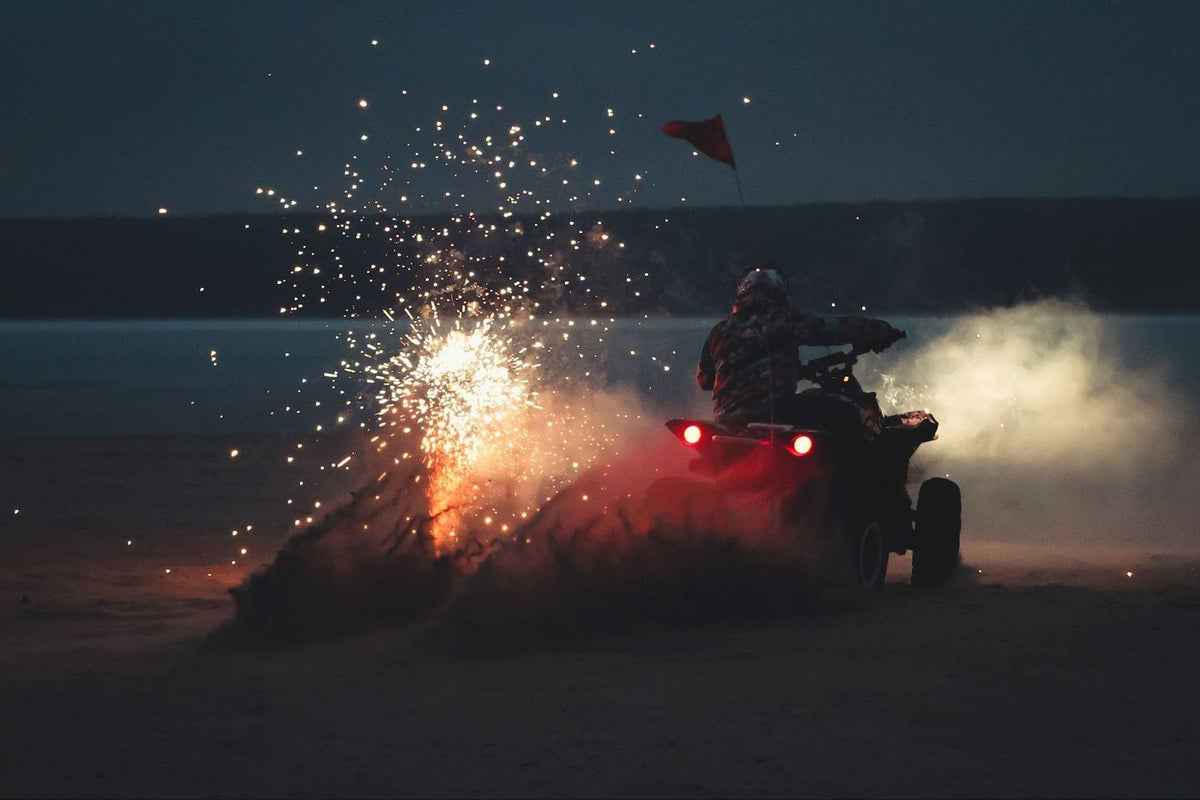
Your stock headlights were built to meet a budget, not to light a trail at speed. That is the whole problem. Factory ATV lighting throws a short, yellow pool of light about forty feet ahead, which is fine on a gravel road and useless when a washout appears at thirty miles an hour. Stock lights set a low bar, and the best LED lights clear it easily.
We design and build LED lighting in our own North American factory, and we ride the same machines you do. This guide covers what separates the best ATV LED light bars from the cheap ones: honest brightness, beam pattern, mount fit, and sealing. ATV light bar size matters too, and we get there, but a correctly sized bar with bad optics still leaves you riding blind.
What Separates the Best LED Light Bars from the Rest
Price tells you almost nothing about an off road LED light bar. A 32-inch bar at thirty dollars and a 20-inch bar at three hundred can both claim 20,000 lumens, and only one of them still works after a winter. Four things decide it: the light source, the honesty of the brightness rating, the beam pattern, and how well the housing keeps water out.
Specialist brands compete on optics: Baja Designs with its OnX6 line, RIGID Industries with the E-Series Pro, KC HiLiTES with the Flex ERA, plus Vision X, Lazer Star and Lightforce. Marketplace labels such as Nilight, Hella and Rugged Ridge compete on price. Tusk, Moose Racing, Quad Boss and SuperATV sit between the two.
We sit on the manufacturing side of that split. Our LED light bars carry a five-year warranty because PERFEX Industries controls the parts that fail, from the die-cast housing to the sealed connector. Browse our LED light bars to see how we spec them.
Why LED Light Bars Beat Halogen and HID Lighting
A halogen bulb converts most of its energy into heat. LED light bars convert most of theirs into light, so a 60-watt LED bar outruns a 120-watt halogen setup and leaves headroom on a 12-volt charging system that was never designed for accessories.
High-intensity discharge lighting throws serious output but needs a ballast, takes seconds to reach full brightness, and handles vibration badly. All terrain vehicles vibrate constantly. LED chips from CREE or OSRAM sit on a solid board with nothing to shatter, and good ones run 50,000 hours. That lifespan outlasts most machines, and the durability shows up as fewer dim corners three seasons in. Ruggedness is not marketing here; a durable bar is one that still works.
Efficiency is the quiet benefit. Power draw decides how many accessories your quad carries before the battery loses ground on a slow trail ride.
Raw Lumens vs Effective Lumens on an LED Light Bar
This is where spec sheets lie. Raw lumens measure what the chips emit inside the housing, before the lens, the reflector and the optics take their share. Effective lumens measure what leaves the light and reaches the trail.
The gap is large. An ATV LED light bar advertised at 20,000 raw lumens often delivers 8,000 to 12,000 effective lumens. Some listings quote a chip maximum no sample ever produces. The brightest claimed number rarely wins in the dark.
Three numbers beat the lumen headline:
- Beam distance in metres, measured to 1 lux, tells you how far you can actually see
- Color temperature in kelvin, where 5000K to 6000K reads as daylight white light and cuts eye fatigue
- Amber output, which pushes through dust and fog where white light bounces back as glare
A bar that honestly reports 9,000 effective lumens will out-light one claiming 30,000 raw and hiding the rest.
Spot, Flood and Combo: Choosing a Beam Pattern
Beam pattern changes a ride more than any other spec. A spot beam throws a narrow cone far down the trail. Flood lights spread wide and close, covering the edges of the path and whatever is about to step out of it. Spotlights and floodlights each solve half the problem.
Most riders want both. A combo bar runs spot optics in the centre and flood optics at the ends, which covers distance and periphery from one housing. Trail riding at moderate speed leans flood. Dunes and open country lean spot. Curved housings widen the spread further, and single row bars stay slimmer than dual row ones at the same length. A single-row housing also sheds mud faster.
LED light pods solve it differently. Mount a pair of LED pod lights at the corners for flood coverage, then keep a narrow bar on the rack for reach. One pod light draws under 3 amps. A long night ride also benefits from rock lights under the frame, chase lights at the rear, and LED whips if other riders need to see you. Our breakdown of spot vs flood LED lights covers the optics in depth.
Shop PERFEX Light Bars Backed by a 5-Year Warranty
We design, build and ship every light from our own North American factory. Our 5-year lighting warranty covers the parts that fail first.
Light Bar Size, Mounts and Off-Road Build Quality
Riders ask about length first and regret it later. Bar length is a fitment constraint, not a performance spec, and the machine decides it. An ATV gives you a handlebar, a front rack, a bumper, maybe a grill. None of those spans fifty inches.
Build quality is where the money goes. Aluminum housing, lens material, waterproof rating and the wiring harness decide whether your light survives three seasons or three rides. Those four parts, not the lumen claim, set the working life of any off road LED light bar.
Matching Bar Length to Your Mount Span
Measure your mount span before you shop. Measure the flat, solid surface where the brackets actually bolt down, not the widest point of the machine. Then check clearance for steering and suspension travel.
Most ATVs land between 10 and 22 inches of usable span. A bar wider than its mounting surface twists the brackets every time you hit a rut. That is how mounts crack. A UTV light bar has more room: roll cages open the range past 30 inches, which is why the best UTV LED light bars run longer than anything sensible on a quad.
Common lengths by machine type:
- Handlebar or narrow rack: 6 to 12 inches
- Front rack or bumper on a utility ATV: 12 to 22 inches
- UTV roof or cage: 30 to 50 inches
Our LED light bar sizing chart lists exact dimensions for every bar and pod we make.
Handlebar, Grill and Flush Mount Hardware
Mounting hardware fails more often than the light does. Universal mounting brackets ship with most bars, and universal means it fits nothing particularly well. An ATV light bar mount built for your model solves what a generic lightbar bracket cannot.
Your mounting options come down to four. A handlebar mount moves the light with your steering, which helps in tight woods. Grill and bumper mounts sit low and read ground contours well. A flush mount recesses the light into bodywork for a clean look and almost no branch snag. Roof and cage mounts give the widest throw but need a rigid surface.
PERFEX makes machine-specific ATV light bar mounts that bolt to factory holes, so nothing gets drilled. Each aluminum bracket ships with hardware, and our guide to installing a light bar on your ATV walks through the job.
Aluminum Housing, Waterproof IP67 Sealing and the Wiring Harness
Housing material decides heat and impact behaviour. Die-cast aluminum pulls heat away from the chips through its fins; plastic housings cook their own LEDs and go dim within a season. Heat dissipation is the whole reason the good bars feel heavy. A polycarbonate lens takes branch hits that glass would not, and marine grade finishes resist road salt.
Sealing is rated by IP number. IP67 means dust-tight and survives brief submersion, the minimum for mud and river crossings. IP68 and IP69K go further. Below IP67, condensation collects inside the lens and the light fogs permanently.
A light bar kit should include the harness. Look for 12 to 16 AWG copper, fused at the battery, with a relay for anything over 100 watts. The rocker switch on any LED light bar needs a seal and a rating that matches the amp draw and amperage of the bar. Plug-and-play connectors should leave enough slack that suspension travel never pulls one loose.
Cheap harnesses fail before cheap lights do, and they fail in the rain.
Pair your light with a proper wiring harness and switch rather than the thin lead some bars ship with. Our wiring walkthrough covers the eight steps.
Match a Light Mount to Your Machine
Every PERFEX light mount is cut for a specific make and model. Bolt-on fitment, no drilling, installation manuals included.
Which Light Bars Fit Your Machine
Generic advice stops being useful at the bolt holes. Mount span, beam pattern and wiring all shift with the machine. Fitment is model-specific, and the right light bar for quad riders changes between a 570 utility machine and an 850 with a bigger stator.
Below are the sizes we recommend most often, based on mount span and electrical headroom. Riders on an Arctic Cat, Kawasaki, CFMoto or Polaris RZR should measure first, since bodywork varies across those lineups. The same logic applies to UTV lighting on a Can-Am Defender, a Can-Am Maverick or a Honda Talon, where cage width sets the limit rather than the rack.
Polaris Sportsman and Yamaha Grizzly Light Bar Sizes
The Polaris Sportsman 570 takes a 20-inch bar comfortably. Its front rack gives a solid span, the charging system handles a 100-watt draw without complaint, and a combo beam suits the mixed work these machines do. Browse our Polaris Sportsman parts and accessories for fitment.
The Yamaha Grizzly 700 earns a 30-inch bar. It runs harder terrain, carries a stronger stator, and the wider rack supports the extra length without flex. For hunting at dusk, the best ATV lights for night riding on a Grizzly lean flood-heavy rather than pure spot, because visibility at the edge of a cut line matters more than reach. See our Yamaha Grizzly accessories for brackets that fit.
Honda FourTrax, Can-Am Outlander and Suzuki KingQuad Fitment
The Honda FourTrax Rancher 420 does best with a 10-inch bar. Its frontal area is compact, the electrical system is modest, and a 10-inch combo adds real reach without taxing the battery on long farm days. Riders who want a spotlight instead of a bar can run two pods.
The Can-Am Outlander 850 handles a 30-inch bar. Speed is the reason: the Outlander covers ground fast enough that spot-weighted optics earn their place, and the platform has the voltage headroom to run them.
The Suzuki KingQuad 500AXi sits between the two at 20 inches. It splits its life between trail and work, and a balanced combo beam serves both. Honda, Can-Am and Suzuki use different rack geometry, so confirm your mount span before ordering.
Shop Light Bars by Make and Model
Pick your machine and we will show you what bolts on. More than 4,000 five-star reviews, free US shipping over $200, duties covered.
Shop Can-Am Outlander Accessories
Questions Riders Ask Before Buying
These come up in almost every call we take. Most concern light bar size, beam pattern or the wiring harness. Short answers below, with deeper LED light bar guides linked above.
What size light bar do I need for my 4 wheeler?
Measure your mount span and work from there. A 4 wheeler light bar usually falls between 10 and 22 inches, with handlebar positions wanting 6 to 12 inches and full-size racks accepting up to 22. Going wider than the mounting surface stresses the brackets and adds no usable light.
Is a combination beam better than spot or flood alone?
For most ATV riding, yes. A combination pattern gives distance from the centre optics and width from the ends, which matters on trails where obstacles appear at the edge of the path. Pure spot wins at high speed in open terrain. Pure flood wins for work lighting and camp. Anyone shopping for the best LED light bar for ATV riding should start with combo, and the best ATV LED light bar for mixed terrain is almost always a combination unit.
Will a light bar drain my ATV battery?
Not while the engine runs, provided the draw stays inside your stator output. A 100-watt LED bar pulls roughly 8 amps at 12 volts. Most modern ATVs supply that comfortably. Running lights with the engine off flattens a battery in under an hour, so wire through a switched circuit with its own fuse.
Are LED light bars legal on public roads?
Rules vary by state and province. Most jurisdictions treat auxiliary lighting as off-roading equipment unless it carries DOT or SAE marking. Covering the bar or wiring it to a separate switch keeps you compliant on connector roads. Safety and legality both argue for checking local regulations before you ride pavement.
Share:
ATV Upgrades That Change How Your Machine Rides
ATV Wheel Spacers: Pros, Cons, and How to Choose the Right Size